How to Hire the Best Wedding Planner in Bahrain

A wedding in Bahrain can look simple on paper: a beautiful venue, a guest list, food, décor, music, and a schedule. In practice, every one of those choices depends on timing, permits, family expectations, vendor quality, weather, and budget control.
That is why hiring a planner is not just about finding someone with pretty photos. The right planner will protect the budget, explain local rules, manage suppliers, and keep the wedding day calm. For couples planning from outside Bahrain, or families organising a large celebration with many moving parts, that support can make the difference between a smooth event and weeks of avoidable stress.
This guide explains how to choose the Best Wedding Planner in Bahrain with a clear, beginner-friendly process.

Start by defining the wedding you actually want
Before contacting planners, make a short brief. It does not need to be perfect. It only needs to give planners enough information to respond meaningfully.
A good wedding brief includes:
Approximate wedding date or preferred month
Estimated guest count
Type of ceremony or celebration
Indoor, outdoor, beach, ballroom, garden, or private venue preference
Budget range in Bahraini dinar
Must-have elements such as live music, traditional rituals, specific cuisine, or late-night hospitality
Number of events, such as welcome dinner, ceremony, reception, and farewell brunch
This step matters because Bahrain offers very different wedding formats. A small legal ceremony followed by dinner needs a different planner from a three-day family celebration with multiple venues. A planner who handles intimate events well may not be the right choice for a 500-guest reception with complex production.
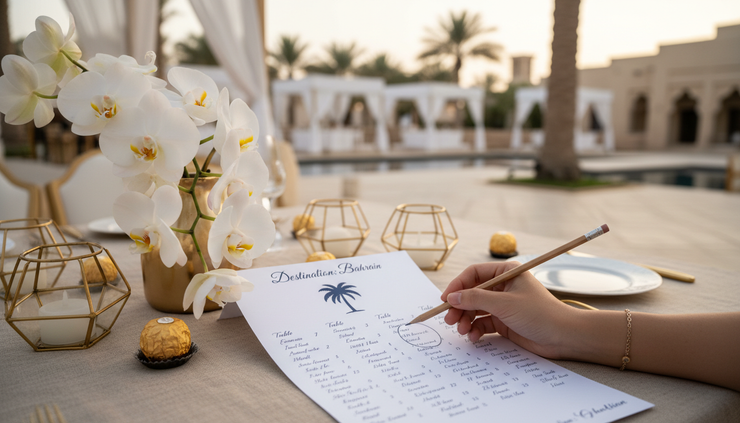
If the wedding involves guests flying in, the brief should also mention travel needs. Bahrain is connected by an international airport and a road link to Saudi Arabia, so guest logistics may include airport transfers, hotel blocks, and regional travel timing. For a Destination Wedding in Bahrain, these details are not side tasks. They are part of the guest experience.
Understand what a wedding planner should do
Many beginners confuse a wedding planner, venue coordinator, and decorator. They can all help, but they do not do the same job.
Role | What they usually handle | What they may not handle |
Wedding planner | Budget, suppliers, schedule, guest logistics, design direction, day coordination | Venue operations outside the wedding contract |
Venue coordinator | Venue access, food service from the venue, room setup, house rules | Full supplier management or personal wedding planning |
Decorator | Stage, flowers, furniture, styling, lighting elements | Budget planning, contracts, transport, guest flow |
A strong planner acts as the central organiser. They help translate ideas into a real plan, then make sure the plan works on the ground.
For example, if a couple wants an outdoor sunset ceremony, the planner should check more than the view. They should think about wind, heat, guest seating, sound quality, lighting after sunset, backup space, and photography timing. Bahrain’s hot season can make outdoor comfort a serious planning factor, especially in the afternoon.
Choose the right planning service level
Not every couple needs full planning. A clear service level keeps costs fair and expectations clean.
Full-service planning suits complex weddings
Full-service planning usually starts months before the wedding. It can include budgeting, venue search, vendor sourcing, invitation timelines, design, hospitality, production, ceremonies, and final event execution.
This is usually the best fit when:
The guest count is large
There are multiple events
The couple lives outside Bahrain
Family expectations need careful management
The wedding has cultural, religious, or legal requirements
The design and production are detailed
Partial planning works when key decisions are already made
Partial planning can help if the venue and major suppliers are booked, but the remaining details feel heavy. The planner may review contracts, suggest missing vendors, build the schedule, and manage coordination closer to the date.
This works well for couples who are organised but need experienced support to connect everything.
Wedding day coordination is for final execution
Day coordination is not just turning up on the wedding day. A professional coordinator usually starts several weeks earlier, studies contracts, confirms suppliers, builds the running order, and manages the event flow.
This option fits couples who have planned the wedding themselves but do not want family members solving problems during the celebration.

Check local experience, not just style
A planner’s style matters, but local experience matters more. Bahrain has its own venue rules, climate patterns, supplier networks, and cultural expectations. A planner who understands those details can prevent problems early.
Ask questions such as:
Which types of venues in Bahrain have you worked with?
How do you handle outdoor weddings during warmer months?
How do you build a backup plan for wind, heat, or rain?
Can you manage both traditional and modern wedding formats?
How do you coordinate with caterers, décor teams, musicians, photographers, and transport providers?
What is your process for guest arrivals and hotel coordination?
Look for specific answers. “We handle everything” is not enough. A good planner explains how they handle it.
For example, if the wedding includes elderly guests, the planner should think about shaded waiting areas, short walking routes, seating comfort, and transport timing. If the celebration includes multiple outfit changes or ceremonies, the planner should ask about private rooms, family access, and timing buffers.
Review proof of work carefully
Photos are useful, but they only show the visible result. Planning quality also shows up in documents, communication, and problem-solving.
Ask for examples of:
Event timelines
Budget templates
Supplier checklists
Floor plan samples
Guest movement plans
Mood boards or design sheets
A planner may not be able to share private client details, which is fair. They can still show blank templates or anonymised samples.
References also matter. Rather than asking, “Were they good?”, ask more practical questions:
Did they respond on time?
Did they explain costs clearly?
Were there surprises in the final budget?
Did suppliers know where to be and when?
How did they handle last-minute issues?
Would you hire them again?
Good references often mention calm communication, clear planning documents, and strong control on the wedding day. Those qualities are not as glamorous as flowers, but they are usually what couples remember most.
Compare budgets in a sensible way
Wedding planning fees vary because weddings vary. A small dinner and a multi-day celebration cannot be priced the same way. Planners may charge a flat fee, a percentage of the wedding budget, or a custom fee based on scope.
When comparing proposals, do not only look at the final number. Look at what is included.
A useful proposal should explain:
Planning services included
Number of meetings or planning calls
Supplier sourcing process
Site visits
Design support
Wedding day team size
Hours covered on event days
Travel or overtime charges
Payment schedule
Cancellation and postponement terms
Be careful with vague proposals. If a planner does not define the scope, it becomes difficult to know what happens when extra work appears.
For example, guest RSVP tracking, airport pickups, ceremony rehearsal, family gift management, and after-party coordination may or may not be included. These tasks sound small, but together they can take many hours.
A clear budget should also separate planner fees from vendor costs. This helps avoid confusion and makes it easier to see where the money is going.
Ask how they choose and manage suppliers
A planner’s supplier network is one of their biggest advantages. Yet the process should be transparent.
Ask how the planner recommends vendors. Do they suggest suppliers based on style, budget, availability, past performance, or all of these? Do they collect multiple quotations? Do they disclose if any referral fee or commission is involved?
Transparent management builds trust.
A planner should also help compare suppliers beyond price. For example, the lowest décor quote may not include setup team size, dismantling, transport, technical drawings, or backup materials. A low catering quote may have limits on staffing, menu changes, or service hours.
The planner’s job is to spot those gaps before a contract is signed.
Confirm legal and cultural planning support
Legal wedding requirements can vary based on nationality, religion, residency status, and the type of marriage ceremony. Rules may also change. For that reason, couples should confirm requirements through official government channels, the relevant court, embassy, or authorised legal adviser.
A wedding planner should not replace legal advice. They can still help by reminding couples what to check, collecting document deadlines, and coordinating appointments or translations where allowed.
Cultural planning is just as important. Bahrain is used to hosting international visitors, but weddings may still need sensitivity around religious dates, prayer times, family customs, music policies, and modesty expectations in certain settings.
During Ramadan, for example, event timing, food service, music, and public behaviour may need extra care. A planner with local awareness can guide the schedule in a respectful and practical way.
Interview planners before deciding
A short interview can reveal more than a portfolio. Speak to at least two or three planners if possible. Keep the conversation structured, but pay attention to how they listen.
Strong signs include:
They ask about priorities before suggesting ideas
They explain limits clearly
They discuss budget early
They give practical examples from past events
They do not promise unrealistic results
They send written follow-ups
Warning signs include:
No written contract
Unclear pricing
Pressure to book quickly without details
Poor response times before payment
Unwillingness to explain supplier selection
No backup plan for outdoor events
No clarity on who will be present on the wedding day
A planner does not need to agree with every idea. In fact, honest pushback can be valuable. If a timeline is too tight, a good planner will say so and suggest a safer version.
Read the contract before paying
The contract protects both sides. It should be clear enough that someone outside the conversation can understand the agreement.
Check for:
Full scope of services
Event dates and locations
Planner fee and payment schedule
Refund, cancellation, and postponement terms
Overtime fees
Team size on event days
Communication method and response expectations
Responsibility for vendor contracts and payments
Liability limits
Force majeure terms for events outside anyone’s control
Do not rely on verbal promises. If something matters, put it in writing. This includes extra events, family meetings, guest logistics, late-night support, or additional site visits.
Build a realistic planning timeline
A planner can work faster when needed, but early booking gives better choices. Popular venues, photographers, caterers, and décor teams may be booked well in advance, especially during cooler months when outdoor events are more comfortable.
A common planning flow looks like this:
Timeline | Main focus |
9 to 12 months before | Budget, planner, venue, guest count, broad design |
6 to 9 months before | Key suppliers, ceremony details, accommodation, travel plan |
3 to 6 months before | Invitations, menu, décor details, entertainment, logistics |
1 to 3 months before | Final guest count, seating, timeline, payments, rehearsals |
Final week | Supplier confirmations, packing lists, family briefings, emergency plan |
For smaller weddings, the timeline can be shorter. For destination guests, multi-day events, or highly customised décor, more time helps.
Make the final choice with three clear filters
After interviews and proposals, compare planners using three filters.
Fit
Do they understand the wedding style, family dynamics, guest needs, and level of formality?
Process
Do they have a clear planning method, written documents, supplier checks, timelines, and backup plans?
Trust
Do they communicate clearly, explain costs, and make decisions feel calmer?
The best choice is rarely the planner with the most dramatic portfolio. It is the planner who can turn the chosen vision into a well-run event without losing control of cost, time, or guest comfort.
For a researched starting point, compare wedding planners in Bahrain and shortlist teams that match your wedding size, style, and planning needs.
FAQ
How early should I hire a wedding planner in Bahrain?
For a large or destination wedding, 9 to 12 months is a safe starting point. For smaller weddings, 3 to 6 months may work if the venue and main suppliers are available.
Is a venue coordinator enough for my wedding?
A venue coordinator manages the venue’s side of the event. A wedding planner manages the wider plan, including suppliers, timeline, design, guest flow, and family coordination. For simple events, venue support may be enough. For complex weddings, a planner is usually safer.
What should I prepare before speaking to planners?
Prepare a rough guest count, preferred month, budget range, number of events, venue style, and any important customs or family expectations. This helps planners give realistic advice.
Can a planner help with legal marriage paperwork?
A planner can help track deadlines and guide you on where to check requirements, but legal rules should be confirmed through official government sources, courts, embassies, or qualified advisers.
How do I know if a planner is reliable?
Look for clear proposals, written contracts, sample planning documents, realistic timelines, and references from past clients. Reliable planners explain their process before asking for full commitment.

A good wedding planner brings structure to an emotional event. Start with a clear brief, ask precise questions, compare written proposals, and choose the professional who explains the work behind the beauty. When the planning is handled well, the wedding day feels effortless for the people who matter most.


Comments