Luxury Weddings Made Easy with Top Wedding Planners in Delhi, Sri Lanka and Thailand

A beautiful wedding can look effortless in photographs, but behind the scenes it is a high-pressure project. Guest travel, venue contracts, rituals, menus, décor, licences, room blocks, artists, weather plans, and family expectations all have to work on the same date, often across different cities or countries.
That is why the right planner matters. In markets such as Delhi, Sri Lanka, and Thailand, experienced wedding teams do more than book vendors. They translate an idea into a workable event plan, protect the budget, manage local rules, and keep the celebration moving when plans change.

Why luxury wedding planning needs local expertise
Large weddings involve hundreds of small decisions, but the difficult part is not choosing between two flower colours. The difficult part is making every decision fit the site, climate, travel plan, budget, and ceremony flow.
For luxury weddings, local expertise is especially valuable because premium venues and vendors often work with strict timelines, advance deposits, production rules, and preferred supplier lists. A five-star hotel may have sound restrictions after a certain hour. A heritage property may limit fireworks, open flames, or heavy décor installations. A beach venue may need a rain plan even in a dry season.
Good planners usually help with:
Venue shortlisting based on guest count, rituals, rooms, and access
Budget planning across décor, catering, entertainment, photography, hospitality, and production
Vendor selection with clear contracts and payment milestones
Guest logistics, including airport transfers, welcome desks, itineraries, and rooming lists
Ceremony coordination for Hindu, Sikh, Christian, Muslim, Buddhist, civil, or mixed traditions
Weather and backup planning for outdoor events
On-site control, so the family can stay present during the celebration
The best planners also know when to say no. If a décor concept blocks guest movement, if a menu is too complex for live service, or if a destination schedule is too tight, they flag the risk early.
Wedding planners in Delhi bring scale, speed, and vendor depth
Delhi is one of India’s strongest wedding markets because it combines luxury hotels, farmhouses, banquet venues, heritage-inspired spaces, couture access, and a deep vendor base. The city is served by Indira Gandhi International Airport, which makes it practical for guests arriving from India and abroad.
Experienced wedding planners in delhi are especially useful for families planning multi-event celebrations. A typical Delhi wedding may include a mehendi, haldi, cocktail, sangeet, wedding ceremony, and reception across two to four days. Each event may need a different design language, artist line-up, menu style, and guest flow.
What Delhi planners handle well
Delhi planners often have strong networks across:
Floral designers and large-format décor fabricators
Bridal stylists, make-up artists, and couture houses
Live bands, DJs, folk performers, and celebrity management teams
Wedding caterers for North Indian, regional Indian, Asian, Mediterranean, and Jain menus
Luxury transport vendors and hospitality desks
Photographers and cinematographers used to large Indian ceremonies
This matters because Delhi weddings move fast. If a décor element needs repair, a late artist needs a revised entry cue, or a baraat route needs better crowd control, a local planner can solve the issue without turning it into family stress.
Best season and planning window for Delhi
Delhi’s most comfortable wedding months are generally from October to March. Summer can be very hot, and outdoor ceremonies need careful timing. Winter evenings can be beautiful, but fog can affect early morning travel, so airport transfers and guest arrivals need buffers.
For premium venues, it is sensible to start 9 to 12 months in advance, especially for popular dates around the winter wedding season. Shorter timelines can work, but choices narrow quickly for top hotels, photographers, and décor teams.

Wedding Planners in Sri Lanka create intimate tropical celebrations
Sri Lanka suits couples who want a wedding that feels scenic, relaxed, and culturally rich. The country offers beach resorts, tea country estates, colonial-era villas, lakefront venues, and heritage locations. Galle Fort, a UNESCO World Heritage Site, is one of the best-known examples of Sri Lanka’s historic setting, while the south and west coasts are popular for seaside celebrations.
Wedding Planners in Sri Lanka are valuable because the island has varied weather patterns and regional differences. Sri Lanka is affected by two main monsoon systems, so the best month can depend on whether the wedding is on the south-west coast, east coast, or hill country. A planner who works locally can guide the date, venue, and outdoor setup with more confidence.
Where Sri Lanka works best
Sri Lanka is a strong choice for smaller luxury celebrations and relaxed multi-day gatherings. It works especially well for:
Beach vows followed by a candlelit dinner
Villa buyouts for privacy
Tea estate ceremonies with mountain views
Welcome lunches with local cuisine
Wildlife or heritage excursions for guests
The island is compact compared with many wedding destinations, but road travel can still take time because of terrain and traffic. A local planner can prevent overpacked itineraries. For example, combining a Galle wedding with a hill country experience may sound easy on paper, but guests need enough travel time and rest between events.
Design and hospitality style in Sri Lanka
Sri Lankan weddings often shine through natural materials and local detail. Think tropical foliage, white orchids, handwoven textures, brass lamps, coconut-based menus, and fresh seafood where appropriate. A skilled planner can blend these elements into an Indian, Western, or mixed ceremony without making the event feel like a theme night.
Planners also help with supplier access. Outside major cities and resort areas, certain production items may need to be transported in. That affects cost, set-up time, and backup planning.
Wedding Planners in Thailand are ideal for polished destination events
Thailand is one of Asia’s most established wedding destinations. It offers luxury resorts, strong hospitality standards, beaches, islands, city hotels, and high-quality event production. Phuket, Koh Samui, Krabi, Bangkok, Hua Hin, and Chiang Mai each bring a different mood.
Wedding Planners in Thailand are useful because the country is easy to love but not always simple to plan from abroad. Island transfers, weather shifts, vendor travel charges, ceremony permissions, and legal paperwork all need careful handling.
What Thailand does especially well
Thailand is known for resort hospitality. Many luxury properties have dedicated event teams, spa services, villa options, and experienced banquet operations. This helps with destination weddings where guests expect a smooth stay from arrival to farewell brunch.
A Thailand planner can coordinate:
Resort negotiations and room blocks
Beach ceremony layouts and backup ballrooms
Thai floral traditions, lanterns, and tropical styling
Indian wedding catering where available
Fire shows, live musicians, DJs, and after-party production
Yacht events, island-hopping, or pre-wedding dinners
For legal marriages, foreign couples usually need documents and local registration steps. Requirements can change, so planners often suggest completing the legal registration at home and holding a symbolic ceremony in Thailand, unless the couple has enough time for paperwork.
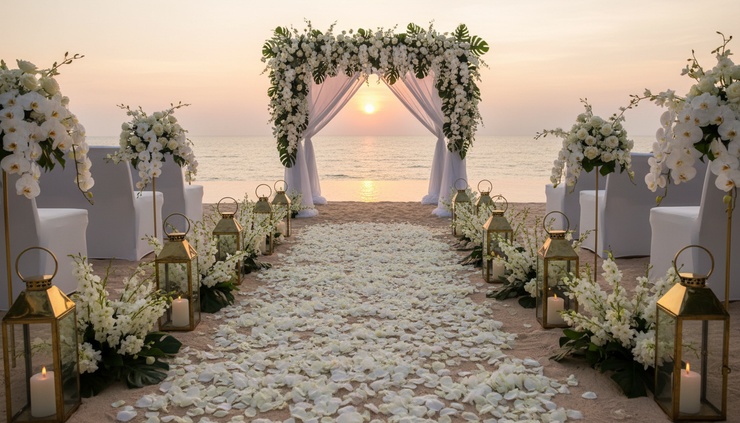
How to choose between Delhi, Sri Lanka, and Thailand
The right location depends on the size of the wedding, the guest profile, the desired mood, and how much travel the group can manage.
Location | Best suited for | Planning advantage | Watch carefully |
Delhi | Grand Indian weddings, large guest lists, multi-event celebrations | Deep vendor network and strong venue variety | Peak season demand, traffic, winter fog, summer heat |
Sri Lanka | Intimate beach, villa, heritage, or tea estate weddings | Scenic settings and relaxed guest experience | Regional monsoons, road travel time, imported production needs |
Thailand | Resort-led celebrations and international guest lists | Strong hospitality, islands, beaches, and polished service | Island logistics, paperwork, weather, vendor travel costs |
Delhi works best when scale and cultural detail matter most. Sri Lanka works best when the celebration should feel personal, scenic, and slower paced. Thailand works best when guests are travelling from different countries and resort comfort is a priority.
What top planners should prove before you hire them
A planner’s Instagram feed can show taste, but it cannot prove project control. Before signing, ask for evidence of how the team works.
Ask for relevant experience
Do not ask only how many weddings they have planned. Ask how many similar weddings they have handled in the same region, season, guest count, and ceremony style.
For example, a planner who has managed a 400-guest Delhi sangeet may understand artist entries, crowd flow, and sound better than a planner who mainly handles intimate brunch weddings. A Sri Lanka planner with beach experience will know how to anchor structures safely and protect décor from wind. A Thailand planner used to Indian weddings will know why a baraat route, pheras timing, and late-night food service need detailed planning.
Review the budget format
A clear budget should separate major heads such as venue, rooms, catering, décor, entertainment, photography, hospitality, transport, licences, and taxes. It should also show planner fees and production management costs.
Avoid vague lump sums. Vague budgets make it hard to compare options and even harder to control changes.
Check communication standards
Ask who will be the main point of contact. Ask how often the team shares updates. Ask whether they use shared sheets, mood boards, production schedules, and guest trackers.
Strong planners document decisions. That protects everyone when multiple family members, vendors, and venues are involved.
Confirm the on-site team
The senior planner who sells the concept may not be the only person on-site. Ask how many team members will attend each event and who will manage hospitality, décor, rituals, artists, transport, and vendor payments.
For large celebrations, one coordinator is not enough. Each zone needs ownership.
A practical planning timeline
A luxury wedding can be planned on different timelines, but the safest approach is to start early.
12 to 9 months before
Finalise city or country
Shortlist venues and dates
Estimate guest count
Hire the planner
Block key vendors
8 to 6 months before
Build event flow
Confirm design direction
Finalise photographer, cinematographer, artists, and catering
Start guest travel planning
Review legal or symbolic ceremony requirements
5 to 3 months before
Lock menus and décor drawings
Send invitations
Plan rooming lists and transfers
Finalise ceremony details
Confirm outfits and styling schedules
Final 8 weeks
Complete RSVP tracking
Freeze production plans
Share guest itineraries
Confirm vendor arrival times
Prepare rain, heat, or delay plans
This timeline also gives families space to enjoy the process. Last-minute planning often costs more because premium vendors are booked and urgent shipping or travel charges add up.
Budget choices that actually change the guest experience
Not every high-cost item has the same impact. The areas guests remember most are comfort, food, timing, music, and atmosphere.
Spend wisely on:
Guest arrival experience
Good food served at the right temperature
Enough bars and service counters
Clear sound for ceremonies and speeches
Shade, fans, heaters, or indoor backup where needed
Transport that does not leave guests waiting
Photography and film teams that understand the rituals
Décor matters, but it should not weaken the experience. A stunning entrance loses value if guests wait 40 minutes for a shuttle or cannot hear the vows.
FAQ
How early should I book a wedding planner for Delhi, Sri Lanka, or Thailand?
For peak dates, start 9 to 12 months in advance. If the wedding is large or involves international travel, 12 months gives better venue and vendor choice.
Are symbolic ceremonies common for overseas weddings?
Yes. Many couples complete the legal registration in their home country and hold a symbolic ceremony abroad. This can reduce paperwork and save time, but check current rules before deciding.
Which destination is best for a large Indian wedding?
Delhi is usually the strongest option for very large guest lists because of its vendor depth, venue choice, and familiarity with multi-day Indian celebrations.
Is Thailand easier than Sri Lanka for international guests?
Thailand often has more resort and flight options across major tourist areas, but the easier choice depends on guest locations, wedding month, and venue access.
What should I ask before signing a planner contract?
Ask about planner fees, payment milestones, cancellation terms, on-site team size, vendor commissions if any, and what services are excluded.

The easiest wedding is the one planned with discipline
Delhi, Sri Lanka, and Thailand can all deliver extraordinary celebrations, but each location needs a different kind of planning. Delhi rewards scale and vendor coordination. Sri Lanka rewards sensitivity to season, setting, and pace. Thailand rewards resort knowledge and careful guest logistics.
The simplest way to choose is to start with the experience, not the décor. Decide how guests should arrive, move, eat, celebrate, and remember the wedding. Then hire a planner who has already solved those problems in the place where the celebration will happen. That is what turns a beautiful idea into a wedding that feels effortless.


Comments